Haruki Sato
Culinary Correspondent
Kaiseki is not merely a meal; it is edible poetry, a meditation on the seasons rendered in texture, color, and taste. Born in the tea ceremony traditions of sixteenth-century Kyoto, kaiseki has evolved into Japan's highest culinary art form—one that demands as much of the diner as it does of the chef.
The Structure of Beauty
A kaiseki meal unfolds in a prescribed sequence, each course designed to prepare the palate for what follows. It begins with sakizuke, an appetizer that sets the seasonal theme, and progresses through as many as fourteen courses, each smaller than the last, building toward a climax before gently receding into rice, pickles, and a delicate sweet.
The philosophy is one of restraint and revelation. No single flavor dominates. No ingredient overwhelms. The chef's skill lies not in bold statements but in subtle conversations between elements—a slice of bamboo shoot paired with kinome leaf, both announcing spring; a sliver of persimmon beside autumn mushrooms, their colors echoing the changing leaves outside.
Reading the Seasons
To dine kaiseki is to experience Japan's relationship with nature at its most intimate. The concept of shun—eating ingredients at their peak moment of perfection—governs every decision. Spring brings takenoko (bamboo shoots) and sakura mochi. Summer offers ayu (sweetfish) and cool, refreshing preparations. Autumn celebrates mushrooms and chestnuts, while winter embraces fugu (puffer fish) and heartier fare.
"In kaiseki, the chef does not create the meal; the season does. The chef merely translates its language into something the tongue can understand."
The Art of Presentation
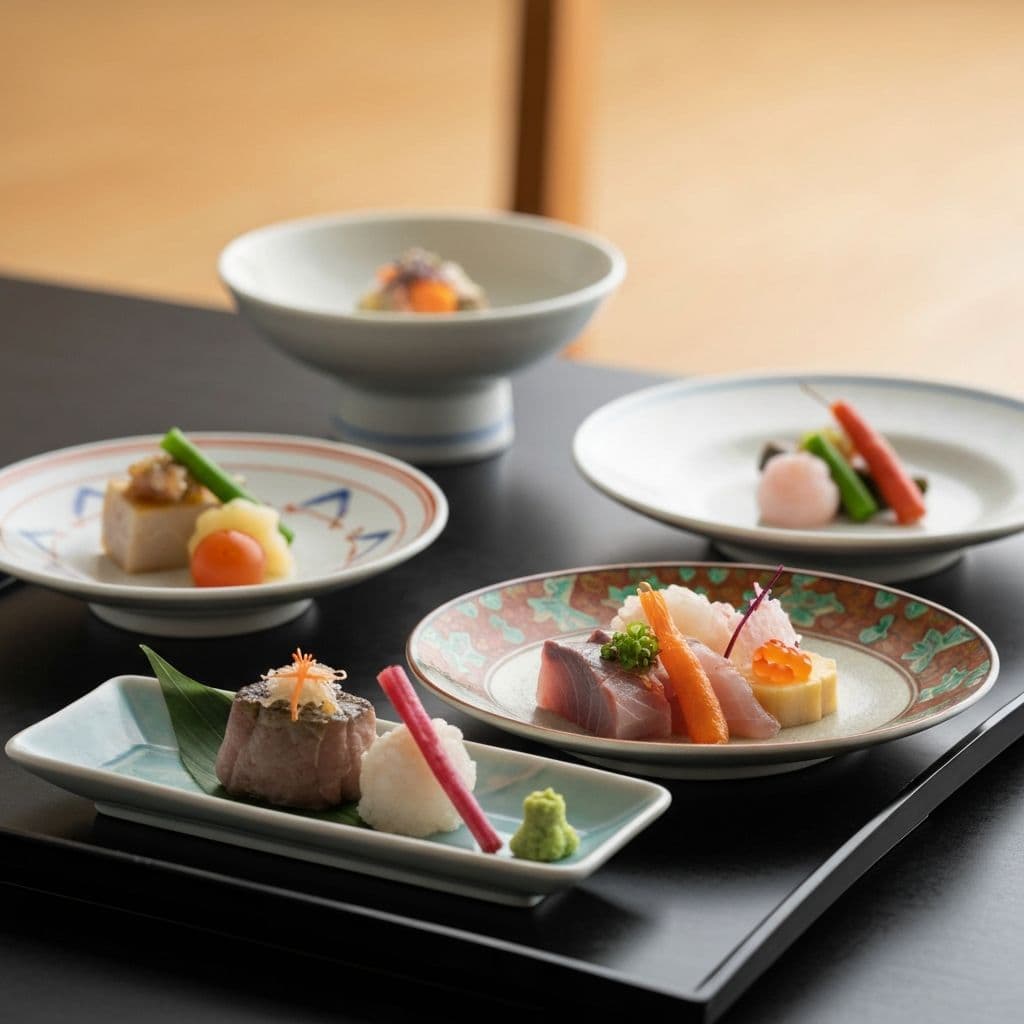
Each course arrives as a composition, arranged on carefully selected utsuwa (vessels) chosen to complement the food's colors and the season's mood. A spring dish might rest on celadon green ceramics suggesting new growth; an autumn course on lacquerware the color of fallen leaves. The containers themselves often become conversation pieces, their provenance and craftsmanship adding layers of meaning to the meal.
When we arrange kaiseki experiences for our guests, we seek not the most famous establishments but those where the chef's vision remains uncompromised—intimate rooms of eight seats or fewer, where the meal becomes a dialogue between maker and recipient, mediated by the wisdom of the seasons.