Takeshi Nakamura
Architecture Editor
In Japanese aesthetics, what is absent often speaks louder than what is present. This philosophy, known as ma (間), represents the profound appreciation of negative space—the pauses, the voids, the silences that give meaning to form.
Understanding Ma
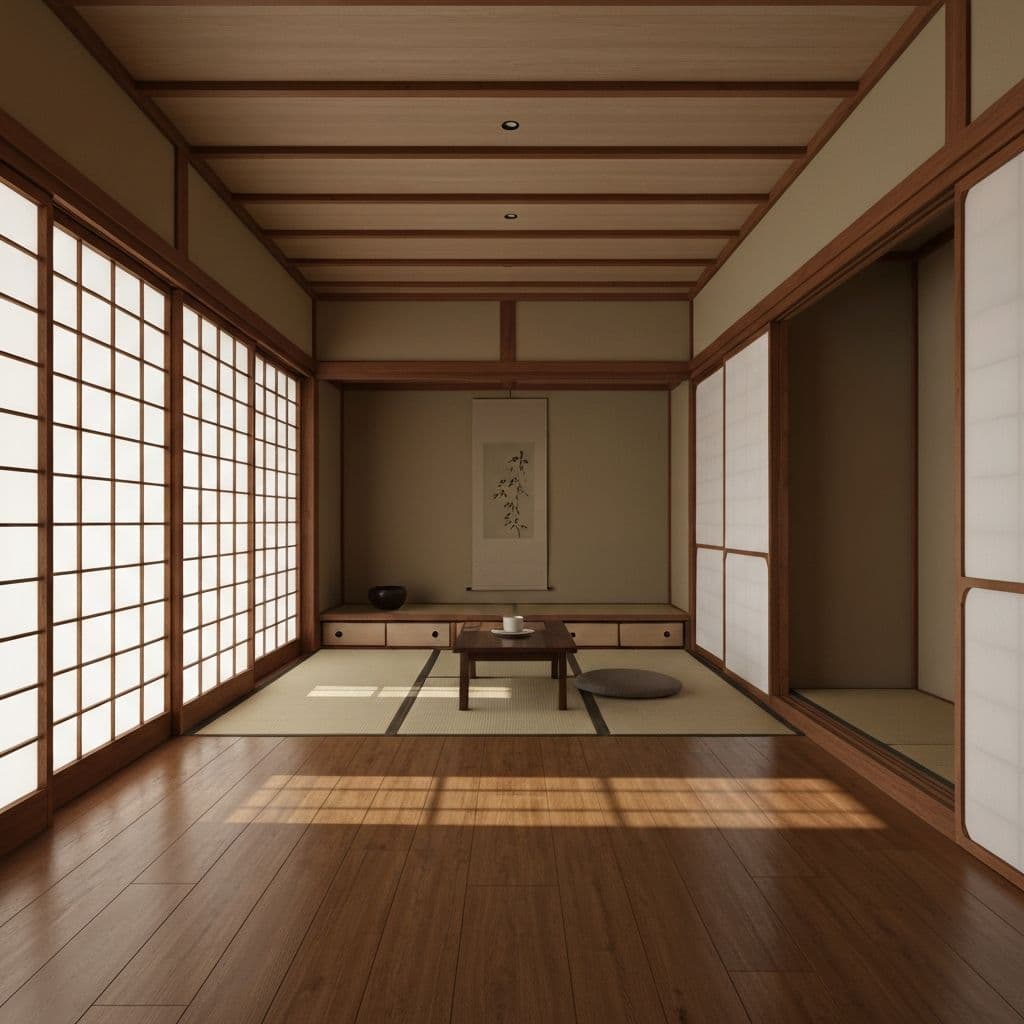
Ma is not merely empty space. It is a pause pregnant with potential, a silence rich with meaning. In traditional Japanese architecture, ma manifests in the deliberate arrangement of rooms, the strategic placement of windows, and the careful consideration of how light and shadow dance through interior spaces.
Consider the traditional machiya townhouse of Kyoto. Its elongated form creates a series of spatial experiences—from the public storefront to the private garden at the rear. Between these zones lie transitional spaces where ma resides: the tōriniwa (passage garden), the zashiki (reception room), each separated yet connected by intentional emptiness.
Ma in Modern Architecture
Contemporary Japanese architects like Tadao Ando and Kengo Kuma have masterfully translated ma into modern design language. Ando's Church of the Light demonstrates this perfectly—the cruciform cut in the concrete wall creates sacred space through absence. The light that floods through this void becomes the church's most powerful presence.
"Space is substance. Cézanne painted and modelled space. Giacometti sculpted by 'weights' the space itself. And Fontana, in his canvases, cuts through to the dimension of space."
In residential architecture, ma influences everything from the placement of furniture to the design of gardens. A room is never filled; it breathes. A garden path is never direct; it meanders, creating intervals of discovery and contemplation.
Living with Ma
To understand ma is to understand rhythm. In music, ma is the rest between notes. In conversation, it is the thoughtful pause. In architecture, it is the spatial interval that allows the eye and mind to rest, to appreciate, to anticipate.
For those seeking to incorporate this philosophy into their homes, begin with subtraction rather than addition. Remove what is unnecessary. Allow furniture to breathe. Let walls remain unadorned in places. Create views through your space that draw the eye through multiple layers of depth.
The finest Japanese homes we represent understand this implicitly. They are not showcases of abundance but sanctuaries of considered restraint, where every element earns its place through the quality of the space it creates—and the space it leaves behind.