Yuki Watanabe
Travel Director
The eastern hills of Kyoto, known as Higashiyama, cradle some of Japan's most photographed temples. Yet between Kiyomizu-dera's famous veranda and Ginkaku-ji's silver pavilion lie dozens of lesser-known sanctuaries where the crowds thin and contemplation becomes possible once more.
The Philosopher's Path Less Traveled
Most visitors walk the Philosopher's Path between its famous anchors, pausing only at designated viewpoints. But the true treasures require detours. Turn uphill at almost any point, and narrow lanes lead to temple gates that see perhaps a dozen visitors daily.
Hōnen-in, accessible through a thatched gate framed by camellia trees, reveals itself gradually: moss-covered sand mounds, a main hall glimpsed through maples, a cemetery where Kyoto's literati rest beneath weathered stone. There are no admission fees here, no crowds—only the sound of water and wind through bamboo.
Dawn at Shisen-dō
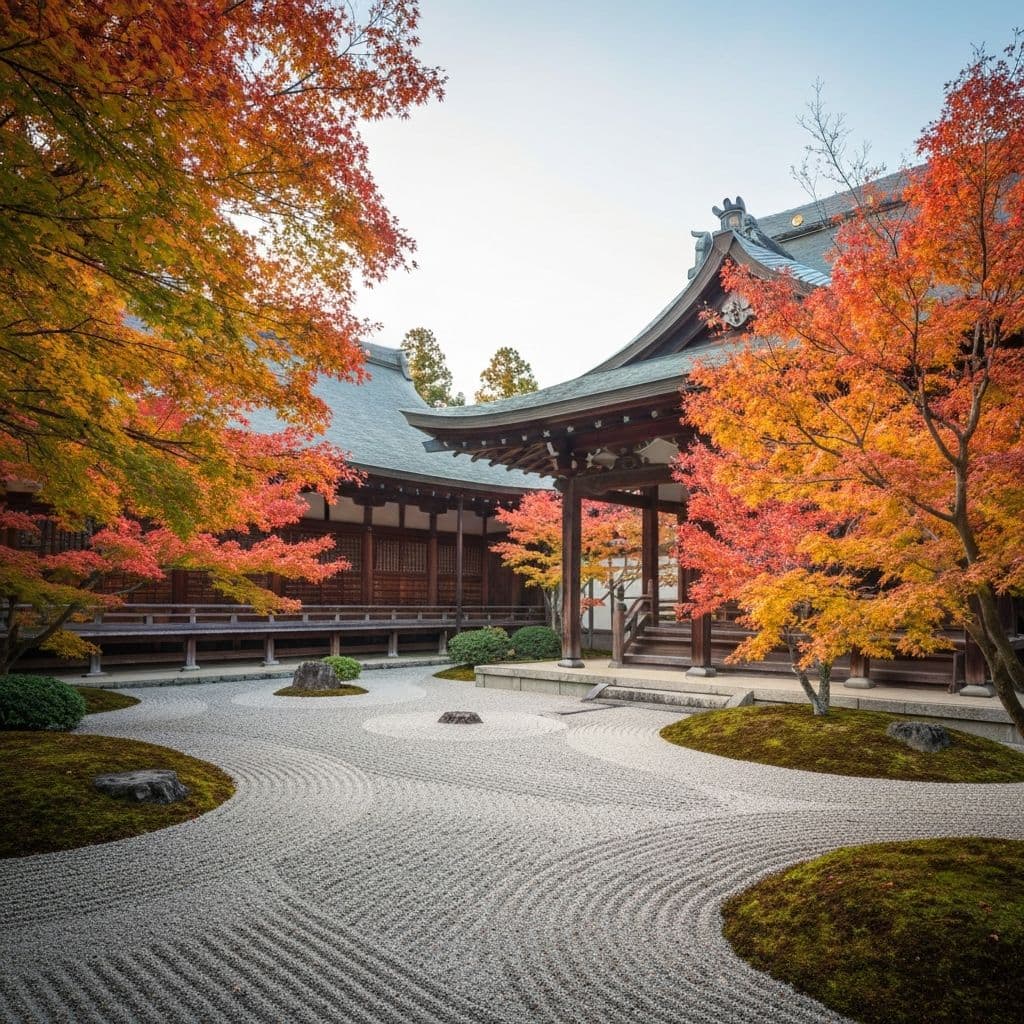
Shisen-dō, the "Hall of the Poetry Immortals," rewards those who arrive early. This seventeenth-century retreat of the scholar Ishikawa Jōzan offers one of Kyoto's finest borrowed landscape gardens—designed to be viewed from the tatami rooms while seated in contemplation.
"The garden teaches patience. It has been teaching it for four hundred years, and it will continue long after we have gone."
In early morning, before the first tour groups arrive, you can sit as Jōzan once did, watching shadows retreat across raked gravel as the sun crests the eastern hills. The only sound is the periodic shishi-odoshi—the bamboo water hammer that punctuates silence with a hollow knock.
The Secret Gardens
Many of Higashiyama's treasures hide in plain sight. Konchi-in, within the vast Nanzen-ji complex, contains a garden attributed to Kobori Enshū that most visitors overlook in their rush to the famous aqueduct. Chishaku-in's panels of painted peonies and autumn grasses rival those in any museum, yet its halls often stand empty.
For our guests, we arrange private morning openings at selected temples—moments of solitude before the gates officially open. We know which abbots welcome serious visitors, which gardens reveal themselves best at certain hours, which stone paths hold the memory of dew longest into the morning. These details transform a visit from tourism into pilgrimage.