Private Japan Editorial
Curation Team
`The Japanese tea ceremony, known as chadō or sadō (the way of tea), is far more than the preparation and consumption of matcha. It is a comprehensive aesthetic discipline that encompasses architecture, garden design, flower arrangement, ceramics, calligraphy, and cuisine—all unified in a practice designed to cultivate presence, harmony, and beauty.
The Architecture of Attention
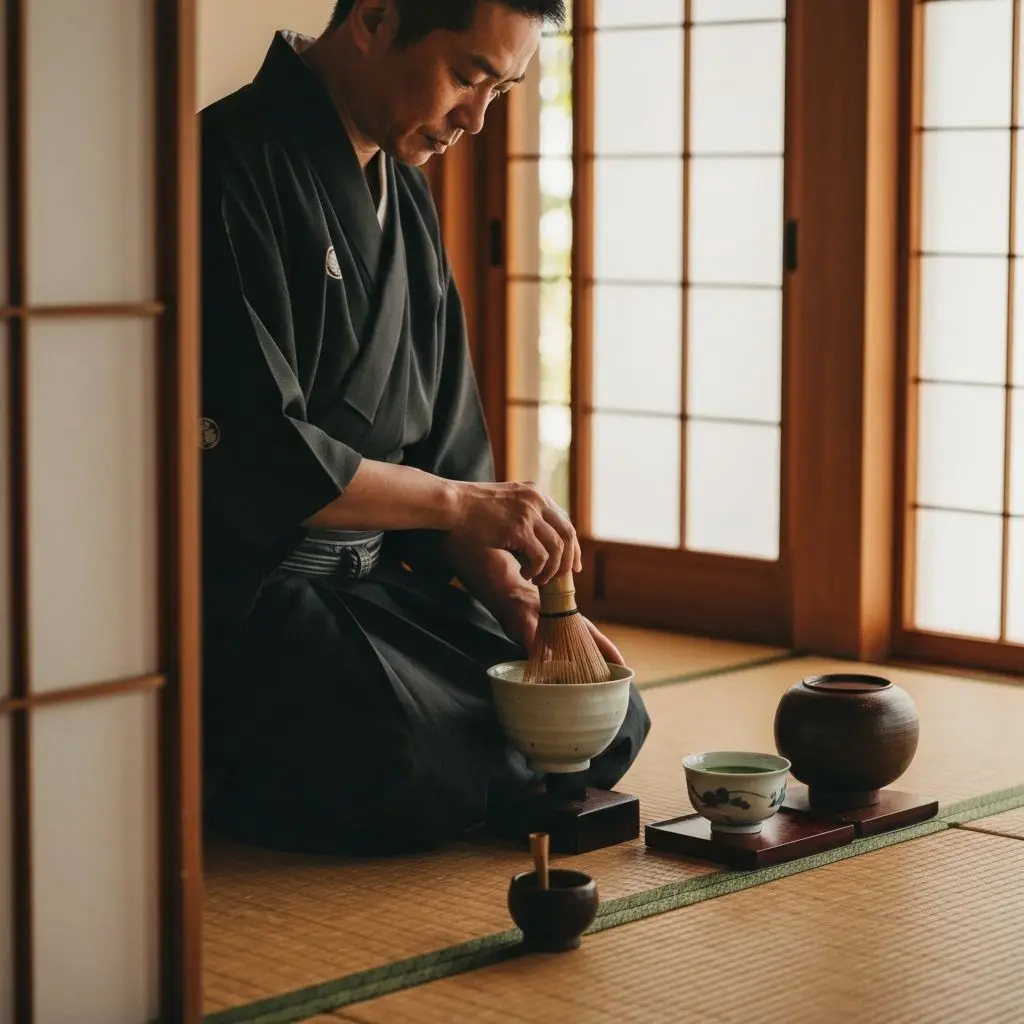
The tea room, or chashitsu, is designed to strip away distraction. Traditionally measuring just four-and-a-half tatami mats—roughly nine square meters—it creates intimacy between host and guests. The low entrance, nijiriguchi, requires all who enter to bow, physically enacting humility regardless of social rank.
Within this minimal space, every element carries meaning. The tokonoma alcove displays a hanging scroll and perhaps a single flower, both chosen to evoke the season and set the ceremony's theme. The iron kettle sings over charcoal, its sound a meditation bell. Light filters through paper screens, softening the world outside.
The Grammar of Gesture
Tea ceremony follows precise choreography developed over five centuries. The host's every movement—how they fold the silk cloth, how they wipe the tea scoop, how they rotate the bowl before presenting it—has been refined to eliminate the unnecessary while honoring the profound.
"In the tea room, host and guest together create something that exists only in that moment, never to be repeated. This is the meaning of ichigo ichie—one time, one meeting."
For guests, too, prescribed movements guide participation. The bowl is received with a bow, rotated to avoid drinking from its front, admired, and returned. Sweets are eaten before drinking, their intense sweetness preparing the palate for the tea's astringency. Nothing is casual; everything is mindful.
Tea as Meditation
The founder of wabi-cha, Sen no Rikyū, famously summarized the tea ceremony in four principles: wa (harmony), kei (respect), sei (purity), and jaku (tranquility). These are not merely aesthetic values but spiritual practices—ways of being that extend from the tea room into daily life.
We arrange tea ceremony experiences that honor this depth. Our guests learn not in tourist demonstrations but in authentic tea rooms, guided by practitioners who have devoted decades to the way of tea. Whether a single session or an extended study, these encounters offer more than cultural observation—they provide tools for cultivating attention and appreciation that last long after the final bowl is emptied.`